Unmasking Autism
Unmasking Autism is a short, neurodiversity-affirming guide for autistic adults who want to understand masking, emotional safety, belonging and authentic connection.
The book explores why many autistic people learn to hide parts of themselves in order to be accepted, and why that performance can become exhausting, lonely and difficult to put down.
It is written for readers who want to begin moving away from constant self-monitoring and towards relationships, spaces and ways of living where less performance is required.
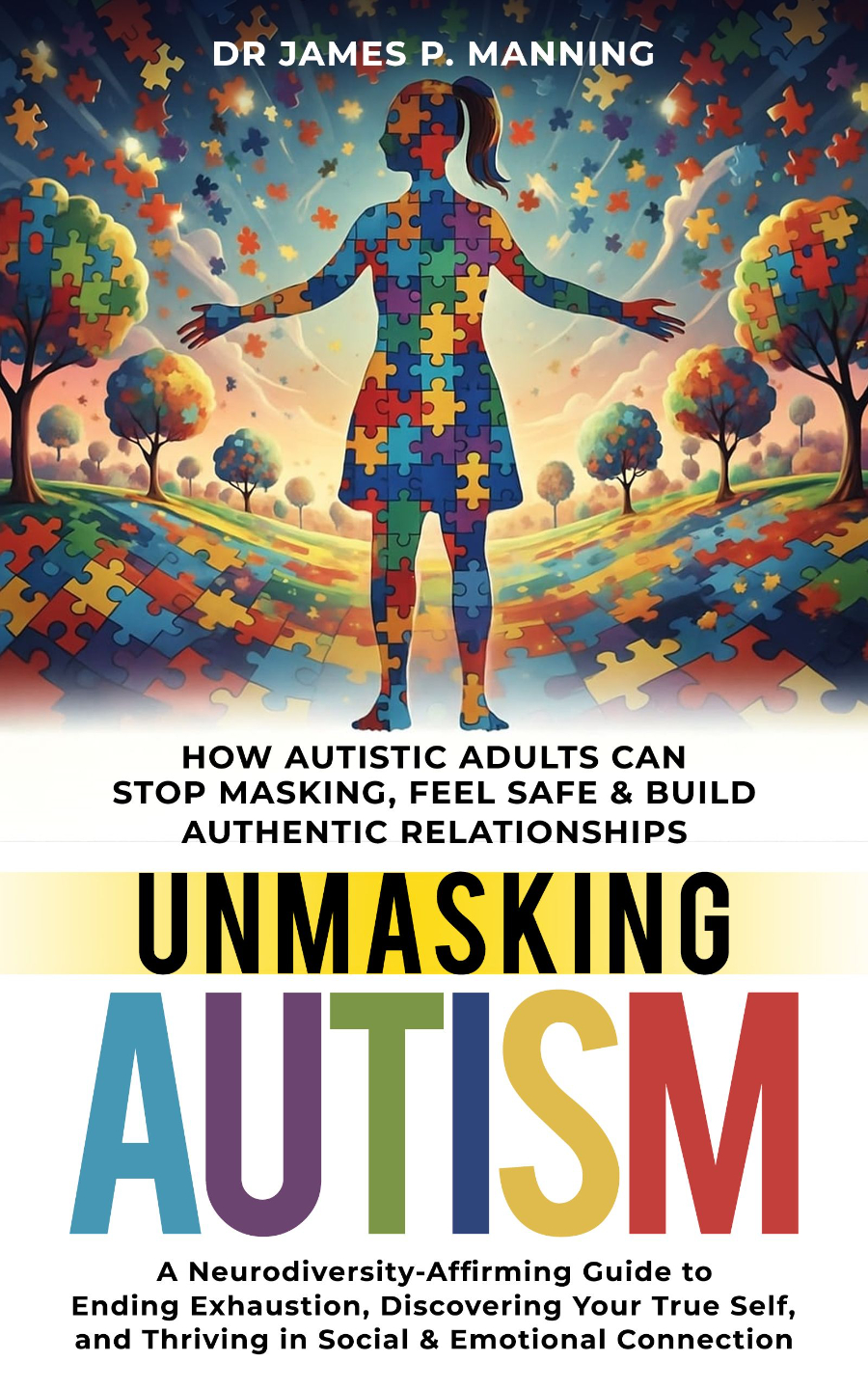
About the book
Masking can help autistic people survive.
It can reduce criticism, soften rejection, help someone get through school, work, family gatherings, friendships, dating and daily social life.
But masking also has a cost.
Over time, a person can become so skilled at appearing acceptable that they lose contact with what feels true, safe or natural. They may seem socially capable from the outside while privately feeling exhausted, unseen or disconnected from themselves.
Unmasking Autism explores that hidden cost.
It looks at loneliness, relational wounds, burnout, belonging, trust, emotional safety and the slow process of becoming more authentic without forcing sudden exposure.
The aim is not to remove every defence overnight.
The aim is to understand why the mask developed, what it has protected, and how life might begin to feel safer without needing to perform all the time.
This book is for
Autistic adults
Late-recognised or questioning autistic adults
People exhausted by masking
People who feel lonely even around others
Readers trying to understand safety, belonging and connection
Partners, family members and friends who want to understand masking more deeply
Therapists, coaches, educators and professionals supporting autistic adults
What the book explores
Why autistic masking develops
How masking can become tied to acceptance and survival
Why loneliness can persist even when surrounded by people
How hidden relational injuries shape the nervous system
What genuine inclusion can look like for autistic adults
How to recognise emotionally safer people
Why trust often has to be rebuilt slowly
How intimacy can be understood through an autistic lens
Why authentic relationships begin with safety
Why this mini-book is short
This book is intentionally concise.
It is not a comprehensive clinical manual. It is a clear, focused guide for readers who want to understand the emotional and relational side of unmasking before deciding what kind of support, reflection or change may be needed.
Sometimes the first step is not another demand to change.
Sometimes it is understanding why the old protection was necessary.
Part of the Neuroversity Series
Unmasking Autism is part of the Neuroversity Series: short, focused guides for autistic and neurodivergent adults seeking to understand themselves and navigate life in a neurotypical world.
This book offers the foundational “why” behind unmasking.
Free companion resource
The free Autistic Alignment Checklist can be used alongside this book.
It is a reflective worksheet for noticing hidden rules, masking cost, sensory load, burnout warning signs and one small movement towards alignment.
Get Free Autistic Alignment ChecklistBuy the book
Unmasking Autism: How Autistic Adults Can Stop Masking, Feel Safe & Build Authentic Relationships is available now.
Buy Unmasking Autism© 2026 East Anglian Psychologists Ltd | Privacy Policy | Contact & Communications Policy | Terms & Conditions